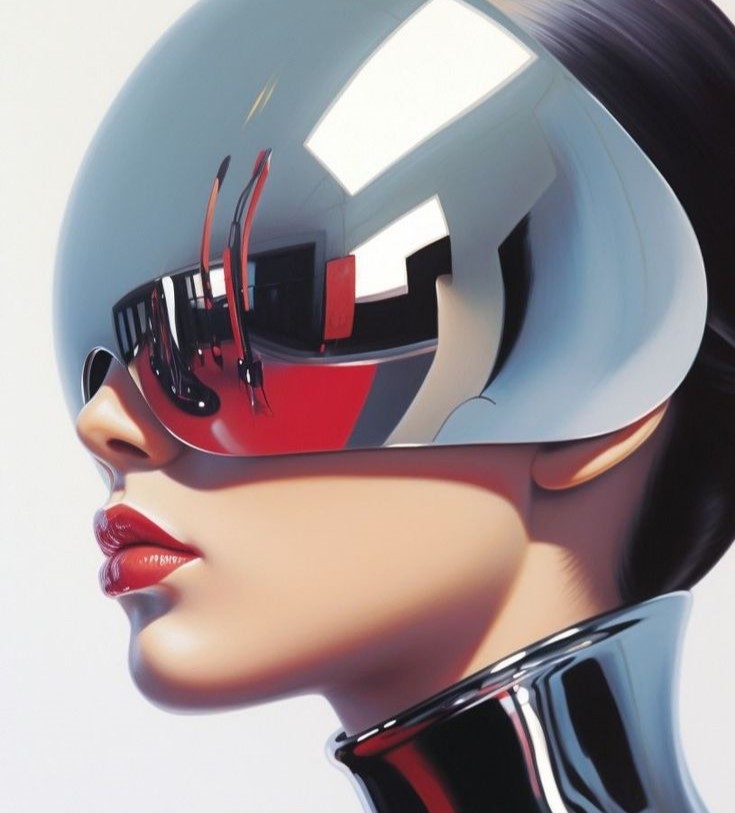
Software engineer and cognitive science dilettante, deeply enthused by the trajectory of science and technology for the advancement of mankind. I invite you to review my past work in projects and writings presented below.
Currently building LEO satellites. Collecting novel experiences and probing complex puzzles is a lifelong goal and gift that keeps on giving. I hold a Bachelor's degree in cognitive science and computer science from Simon Fraser University.
In 2024 I'm pursuing: space economics, computer architecture + lots of coding, and longevity routines
Software Engineer, MDA Space| Oct 2023 - Present
Business Analyst & Software Developer, Kron Technologies | June 2023 - Oct 2023
Software Test Engineer, Sierra Wireless | Jan 2022 - Aug 2022
Research Assistant, Cognitive Science Laboratory | Aug 2021 - Jan 2022
Model, Family Management | Jul 2021 - Present
A topic that both captivates the mind and exhibits profound complexity lies in the core of quantum computing. The era of Richard Feynman's ingenious thought experiments and Paul Benioff's efforts in quantum computers sparked a scientific pursuit that, after four decades, continues to superpose itself into ever more intricate forms. It was the theoretical viability of the Quantum-Mechanical Turing Machines that set the stage for the exploration of quantum algorithms. The endeavor to attain quantum supremacy, exemplified by challenging the extended Church-Turing thesis, highlights the union of fundamental physics concepts and computational advancements in the pursuit of superior computing capabilities.
Quantum supremacy is achieved when computational tasks are executed using quantum-mechanical principles, requiring exponentially fewer steps compared to the most efficient classical algorithm on a classical computer. Pioneering advancements in the field were made by Peter Shor, Daniel Simon, and Lov Grover during the 1990s. As research progressed, computer scientists identified that algorithms generally belong to one of the following categories: Algebraic and Number Theoretic Algorithms, Oracular Algorithms, and Approximation and Simulation Algorithms, which focus on Optimization, Numerics, and Machine Learning. Quantum algorithms developed since the 1990s have demonstrated polynomial, super-polynomial, and even exponential speedups on modern quantum processors. Recent progress in quantum machine learning applications, which build upon previous algorithms and contemporary quantum applications, have provided scientists with the tools necessary to tackle the long-standing, enigmatic NP-hard and NP-complete problems.
It is crucial to recognize that the complexity and hardware resources required for experimental execution of quantum algorithms differ depending on the algorithm type. Many, if not most, quantum applications encompass more than one quantum algorithm. It is essential to differentiate between a quantum algorithm, which embodies the abstract expression of the computational goals, and the computer code itself, which represents the algorithm and details its implementation. In this context, a quantum circuit is the quantum computing counterpart of classical code, with input data either directly encoded or dynamically generated by the gate structure of the quantum circuit itself.
The challenge lies in the counterintuitive nature of quantum mechanics, which complicates the development of optimal quantum computations specifically tailored to solve NP-hard problems in a given hardware device's noise regime. As such, it is paramount to concentrate on advancing technologies that can sustain computation, reduce decoherence, and maintain state fidelity. This includes enhancing transmons, ion traps, high-quality qubits, and refining quantum computing models such as quantum logic gates and quantum annealing. These areas are presently undergoing transformative progress in the field of quantum computing.
One method developed to improve the usability of quantum computing includes error correction. The process is applied at the application and processing layers of the quantum computer to improve the measurements of qubits that contain varying noise levels. Computer scientists have begun deploying machine learning methods that can detect the qubits with the least noise, allowing for preferential selection of superior qubits for computation. Machine learning applications that compile their own code can also generate a general algorithm designed to execute the assigned task on a computer using minimal computational resources and the fewest possible logic gates. Such applications often employ hybrid quantum-classical approaches, running only the most performance-critical sections on a quantum computer. In current small-scale quantum systems (comprising a few dozen qubits), each qubit is tuned to a distinct frequency. By transmitting pulses at a specific frequency, qubits can be addressed on a shared signal line, progressing through the application, classical, and digital processing layers before reaching the final quantum layers.
Numerous hardware platforms are being explored for the development of quantum computing, with companies such as Google, Intel, IBM, and D-Wave Systems conducting research on a range of technologies. The quest to identify the most successful technology, whether it be superconducting electrical circuits or trapped-ion approaches, continues to progress. In March 2021, a paper reported the successful development of a programmable nanophotonic circuit chip, utilizing a straightforward optical circuit with squeezed light and beam splitters to perform algorithm sampling at rates far surpassing the capabilities of classical computers. The photonic chip is distinct due to its technological basis and notable benefits, such as its reprogrammable nature and cloud accessibility.
When dealing with a high number of computations, this advantage could be substantial. In some cases, such as with specific cryptographic or optimization problems, the speedup provided by quantum computing can be so significant that it would take a classical computer billions of years to solve the problem, while a quantum computer could solve the same problem in a much shorter time. This advantage grows even larger as the number of computations or the size of the problem increases.
In conclusion, the field of quantum computing has made remarkable strides in the past five years, with promising investments set to yield substantial returns as the technology continues to evolve. These advancements are poised to drive us into the fourth technological revolution and beyond. However, further refinement is still necessary in various areas such as chip fabrication processes, cryogenic control engineering, quantum algorithm development, and data management. Only through the seamless integration of these efforts can we truly unlock the captivating potential of quantum computing that lies ahead.
In The Treatise of Human Nature, Hume dissects two vital components: ideas and impressions. He asserts that ideas are forged from impressions, or sense-datum, the very essence of mental events. Passion and emotion, too, fall within the dominion of impressions. Like a sculptor shaping his masterpiece, Hume posits that even the most intricate ideas can be traced back to their rudimentary impressions, including the ideas of one's own self.
To grasp Hume's rejection of personal identity, one must first voyage into the depths of his classification of human thought, wherein ideas and impressions reside. Hume ascribes ideas of the self to the images etched in an individual's memories, with the mind serving as a grand stage upon which these ideas are displayed. Relations are then introduced to bind these objects together, like an invisible force.
These relations, the very connective tissue of the mind, guide the imagination to infer the connectedness of distinct objects across the expanse of time. Resemblance, contiguity of space and time, and causation form the triumvirate of relations in Hume's treatise. In this grand design, ideas and impressions are discrete mental constructs, and without the presence of these relations, the mind's successive existence would crumble.
Hume challenges the notion that any object can persist through time as the very same entity, wielding arguments anchored in his foundation and system of relations, the glue that binds ideas and impressions together. He contends that the mind is in a perpetual state of receiving and processing stimuli, evolving with each new piece of information. This premise strikes at the heart of the definition of identity, both as an attribute and as a quality of self. A true identity must consist of unyielding and uninterrupted components throughout time, yet the ever-changing perception of the mind denies the existence of such an identity.
Hume delves deeper into this matter, highlighting humanity's propensity to oversimplify the relations between successive objects and experiences. He elucidates this point with an example: an oak tree's growth from a seedling to maturity overnight would lead one to question its identity due to the extreme difference in proportion. However, when changes manifest gradually, the mind interprets them differently. Hume posits that humans often mistakenly conflate identity with qualitative or numerical identity.
Likewise, Hume applies this reasoning to the notion of self as an identity. When personal identity is defined by a succession of images and experiences, individuals are inclined to believe in a consistent identity that, in truth, does not exist. The imagination plays a pivotal role in this deception.
Hume's arguments are indeed compelling. He denies the existence of a self altogether by positing that a true self must be conceived by a singular impression. However, a person is an amalgamation of numerous impressions, each in a constant state of flux. Consequently, the idea of self cannot be formed from these impressions, rendering such a notion nonexistent. Hume expands on this argument by commenting on the nature of the flux in which our minds are suspended, claiming that it is intricate and infinitely variable, devoid of any inherent simplicity.
Furthermore, Hume disassembles the conception of identity by scrutinizing the existence of relations that act upon the mind's ideas. He contends that the mind, in tandem with relations, can compound and alter ideas by its parts. The relation of causation is integral to Hume's philosophy, as he believes it unites new instances of impressions into the existing tapestry of identity in memory. Hume asserts that causation itself can never be perceived, only inferred. As such, the persistence of identity increasingly appears as a human failing, a tragic flaw ingrained in the fabric of our nature.
In essence, Hume argues that the relation of causation, in concert with the relations of contiguity and resemblance, unveils how the imagination seeks to interpret the ceaseless change in objects over time as enduring identities. Similar ideas or impressions are assembled together in the mind, connected through contiguity as a substitute for the conception of their permanence, sameness, and identity: the mirage of continued existence.
In this light, Hume's philosophy reveals that while identity-through-time is a critical and practical facet of our immediate external world, it lacks a core truth that substantiates those experiences of sameness in objective reality. The notion of self, encompassing what humans cherish as the manifestations of soul and mind, is nothing more than a projection of our psychological determination upon our collective experiences. In the final analysis, the only rational and sensible metaphysical belief to embrace, when all is said and done, is that humankind is but a bundle of experiences, a tapestry of impressions woven together by the thread of time.
The Boeing 737 Max, a fourth-generation aircraft, experienced two catastrophic accidents within a span of five months. Lion Air Flight 610 crashed into the Java Sea on October 29, 2018, followed by Ethiopian Airlines Flight 302 crashing on March 10, 2019. These incidents prompted the grounding of all 737 Max flights worldwide. This essay examines the software failure related to the Maneuvering Characteristics Augmentation System (MCAS) and its implications for the accidents.
The MCAS is an automated flight control system designed to prevent the aircraft from stalling by adjusting the angle of attack. It operates in the background, counteracting any tendency for the aircraft's nose to pitch up, which could lead to a loss of lift and a subsequent stall. The system relies on data from angle-of-attack (AoA) sensors to determine the aircraft's position in the sky.
Black box data from both crashes indicated that the planes were brought down by the same malfunctioning automated system, the MCAS. Satellite-tracking data revealed "vertical variations" in the Ethiopian Airlines flight, similar to those observed in the Lion Air crash. These variations suggested that faulty sensor readings were fed into the MCAS software, causing it to activate erroneously and force the plane into a persistent nose dive.
The MCAS software was designed to rely on a single AoA sensor, leaving it vulnerable to erroneous data from a malfunctioning sensor. This design decision created a single point of failure, which contributed to the accidents. Furthermore, Boeing had rejected a safety system that could detect the plane's position in the sky and identify malfunctioning sensors, citing cost reduction as the primary reason for the decision.
Investigations by The New York Times revealed that the Federal Aviation Administration (FAA) failed to fully review the MCAS software, allowing Boeing to implement it without adequate scrutiny. This lack of oversight and regulatory involvement in the certification process contributed to the software failure and the subsequent accidents.
In conclusion, the Boeing 737 Max accidents can be attributed to a software failure in the MCAS system, exacerbated by faulty sensor readings and design flaws that made the system vulnerable to a single point of failure. Insufficient regulatory oversight and cost-saving measures compromised safety and ultimately led to the tragic loss of lives. It is essential that aircraft manufacturers and regulatory agencies prioritize safety and implement rigorous review processes to prevent such incidents in the future.
“I learned to recognise the thorough and primitive duality of man; I saw that, of the two natures that contended in the field of my consciousness, even if I could rightly be said to be either, it was only because I was radically both”
- Dr. Henry Jekyll (Stevenson, 2017)
Like the two natures inside Dr. Jekyll, split-brain patients reveal a duality within themselves that raises questions about consciousness. Early research into these patients indicated no significant changes in their behavior and subjective experience, yet experimental tasks uncovered disrupted interhemispheric communication and the ability of each hemisphere to report two simultaneous versions of reality.
The concept of dual consciousness challenges our understanding of the intact brain and prompts us to consider whether two conscious agents could occupy one body. This could suggest that the brain was unified before being split, and only became dual after the commissures were severed, or that each hemisphere inherently contains an independent consciousness that may be normally inhibited or perceived as one.
Experimental findings support the idea of dual consciousness, with each hemisphere demonstrating unique perspectives while still exhibiting synchronized action. Opponents of this perspective may argue that unified information results from two unintegrated consciousnesses coming to the same conclusion via external means. However, conditions reveal that each consciousness holds independent thoughts and goals, emphasizing the existence of unique points-of-view.
In 1939, Dr. van Wagenen performed the first surgical callosotomy to treat epilepsy, and nine more patients received the procedure over the next three months (Wagenen & Herren, 1940). Based on these ten surgeries, Wagenen and Herren concluded that consciousness and functioning were unaffected by callosotomy, suggesting that consciousness is not split by this procedure. However, Akelaitis (1945) reviewed the outcomes of two of van Wagenen’s patients and found that they were unable to follow plans and move in a self-directed manner. He called this behavior "dyspraxia," attributing it to either inattention or the patients' beliefs about the implications of callosotomy. Even when patients exhibited behavior indicating a disassociation between the left and right sides of the body, consciousness was still not considered to be split.
Gazzaniga, Sperry, and Bogen conducted some of the earliest research supporting the idea of split-consciousness (Gannaniga & Sperry, 1967; Sperry, Gazzaniga, & Bogen, 1969). Their experimental tasks measured the individual ability of each hemisphere, as well as communication between them. Their initial conclusion was that each hemisphere was independent and that the left hemisphere, or whichever hemisphere was associated with language, was the dominant one. However, this may have been due to early experimental design that unknowingly favored verbal abilities. As their research progressed, their idea of dual consciousness shifted away from dominant and subordinate hemispheres. Instead, each hemisphere was seen to be conscious, with unique specialization and function (Sperry, 1984; Ledoux, Wilson, & Gazzaniga, 1977). Furthermore, as alternative theories presented alternative evidence of unified consciousness in split-brain patients, the dual consciousness theory adapted to include cross-cueing and the idea of the language-associated hemisphere as the "interpreter" (Gazzaniga, 2000; Volz & Gazzaniga, 2017).
The idea of unified consciousness has been a long-standing debate in the scientific community. Some have argued that cross-cueing between the two hemispheres can lead to a form of unified consciousness. For example, if a split-brain patient sees a picture of a dog in the left visual field (and thus processed by the right hemisphere), and then sees a picture of a bone in the right visual field (and thus processed by the left hemisphere), the patient may be able to verbally describe a dog eating a bone, indicating some level of integration between the two hemispheres.
However, this view fails to take into account the fact that cross-cueing is a form of external sharing of information and does not involve the same level of information processing as the commissures that connect the two hemispheres. The commissures allow for the transfer of information between the two hemispheres at a much more fundamental level, allowing for the integration of information in a way that cross-cueing cannot. Moreover, the idea that cross-cueing leads to unified consciousness raises the question of how we define a single conscious agent.
If we accept that two separate people looking at the same stimulus do not form a single conscious agent, then it follows that cross-cueing between the two hemispheres cannot create a single conscious agent either. This argument is supported by the fact that intact brains can also be seen as having two nearly identical consciousnesses, one for each hemisphere (Puccetti, 1973). Each hemisphere processes experiences independently but in parallel, resulting in their apparent near identical personality.
It must be recognized that the idea of a single conscious agent based on integrated information is woefully inadequate. The objective truth is that two individuals cannot be considered as one unified consciousness, nor can two hemispheres, whether communicating internally or externally, be viewed as such. This is an objective fact, not a matter of subjective interpretation.
Furthermore, the fallacious belief that language is necessary for consciousness must be exposed for what it is. Language is nothing more than a tool for communication, and is not a prerequisite for conscious thought. Empirical evidence has shown that the non-verbal hemisphere is fully capable of exhibiting all the hallmarks of consciousness, such as deliberate planning and thought.
The issue of split-brain patients and their experience of dual consciousness is a fascinating topic that presents us with unique opportunities to explore the workings of the brain and the nature of consciousness itself. While split-brain patients may appear to behave normally, under experimental conditions they demonstrate distinct points-of-view and behaviors, implying the existence of separate consciousnesses in each hemisphere.
At the heart of this issue lies the question of how information is processed and integrated within the brain. What mechanisms allow for the apparent unity of consciousness, and how do these mechanisms change when the brain is split? By answering these questions, we can gain a deeper understanding of the fundamental workings of the brain and the nature of consciousness itself.
The implications of this research could be far-reaching, not just for neuroscience and psychology, but for our understanding of the nature of reality itself. By exploring the duality of consciousness in split-brain patients, we can gain new insights into the fundamental mechanisms that allow us to perceive and interact with the world around us.
To achieve these goals, we must continue to approach this issue with an open mind and a commitment to innovation and exploration. By harnessing the latest tools and techniques in neuroscience, such as optogenetics and deep brain stimulation, we can gain a deeper understanding of the workings of the brain and the nature of consciousness, and pave the way for new discoveries and insights that could transform our understanding of the world.